
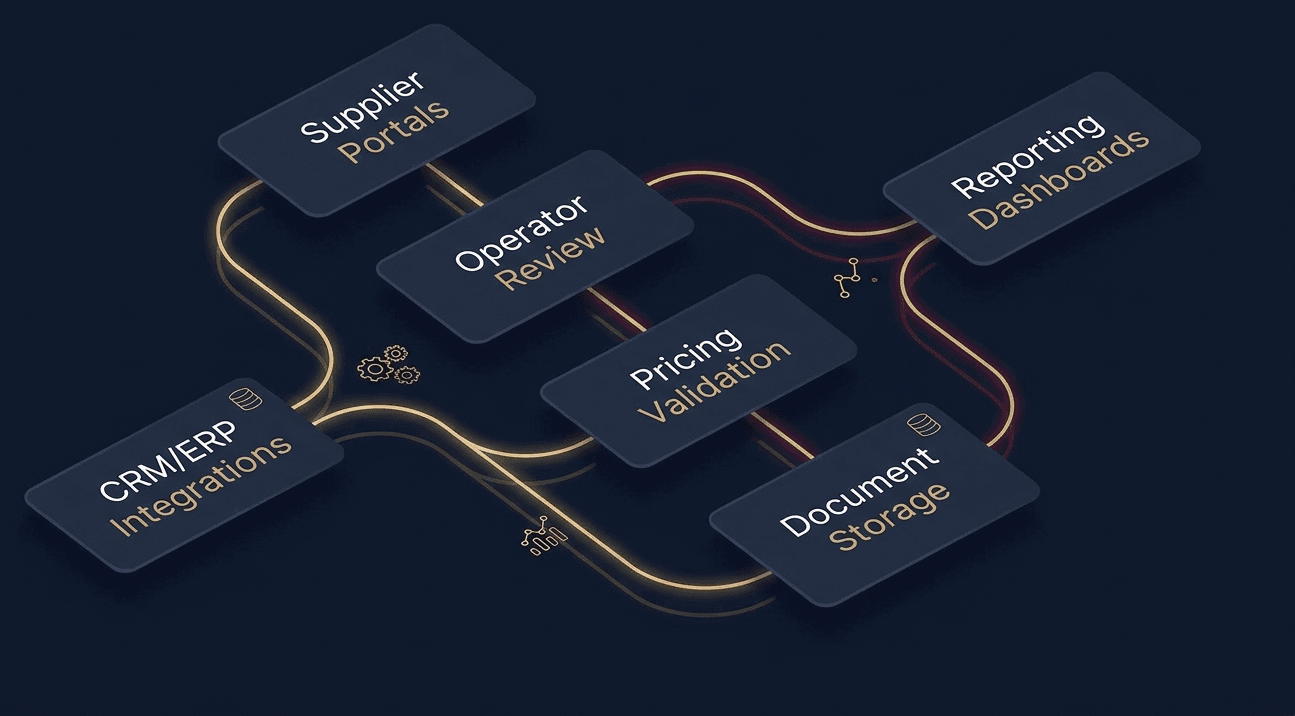
What to inspect
Start with the repeated business event
Name the recurring motion: an RFP, LTO, seasonal reset, new supplier intake, catalog refresh, buyer review, pricing update, or distributor handoff. If the event is not repeated or strategically important, a full software project may be too heavy.
Separate workflow pain from data pain
Workflow pain shows up as unclear ownership, status chasing, approval gaps, and review bottlenecks. Data pain shows up as inconsistent product fields, stale assets, missing documents, duplicated records, and pricing assumptions no one trusts. The fix may be software, cleanup, or both.
Decide what should be configured, integrated, or custom-built
Use BevBridge RFP or catalog workflows when the process already fits them. Integrate when a trusted source system should remain in place. Build custom software when the missing process is valuable, repeatable, and too specific for an off-the-shelf tool.
Define the first useful slice
A strong first slice has one owner, one decision point, a clear before-and-after workflow, and a visible output: a cleaner RFP package, an operator review board, a supplier portal, an exception queue, or a reusable catalog segment.
Keep humans in the control loop
Beverage decisions involve relationships, market context, compliance awareness, and timing. Automation should reduce manual rework and surface exceptions, not hide uncertainty or turn commercial judgment into a black box.