
What to inspect
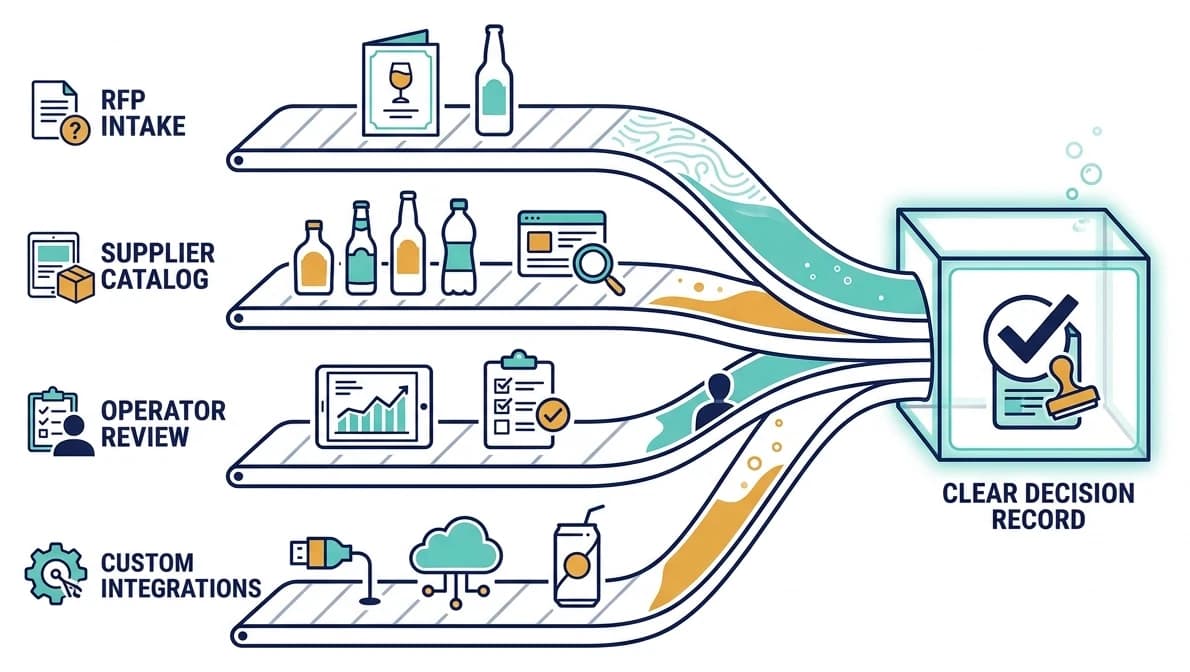
Map the current request path
List where the RFP starts, who owns the ask, which categories or line items are included, and what supporting material suppliers need before they can answer. A messy launch brief becomes messy data downstream.
Trace supplier response friction
Look for inconsistent fields, missing images, unlabeled variants, stale sell sheets, unclear pricing assumptions, and attachment-heavy responses. A structured supplier response can remove repeated cleanup at each of these points.
Separate review from administration
Operators and other reviewers should not have to sort through the administrative layer. Give them focused comparison views, comments, favorites, open exceptions, and the context behind the recommendation.
Preserve the decision trail
Record why a product was selected, rejected, parked, or sent back for more information. The next RFP should start with that record, not another search through old files and inboxes.